Overdose Prevention 101
This page shares information and resources on overdose prevention. You’re invited to draw on this information as you create your entry!
What is overdose prevention?
Overdose prevention refers to strategies that help people stay safe when using drugs and reduce the risk of fatal overdose. Overdose prevention includes a wide range of strategies including: recognizing the signs of an overdose, carrying naloxone, testing your drugs and avoiding using alone.
Overdose risk is highest when someone uses opioids or uses multiple types of drugs at the same time. Opioids include:
Fentanyl
Heroin
Prescription pills (oxycodone/percocet/oxycontin)
Codeine (lean)
You can also overdose on stimulants such as cocaine, crack, ecstasy/MDMA and meth. This is sometimes referred to as overamping and may look and feel different than an opioid overdose. Less stimulant overdose prevention tools exist and naloxone is not effective at reversing stimulants.
Which drugs can you overdose on?
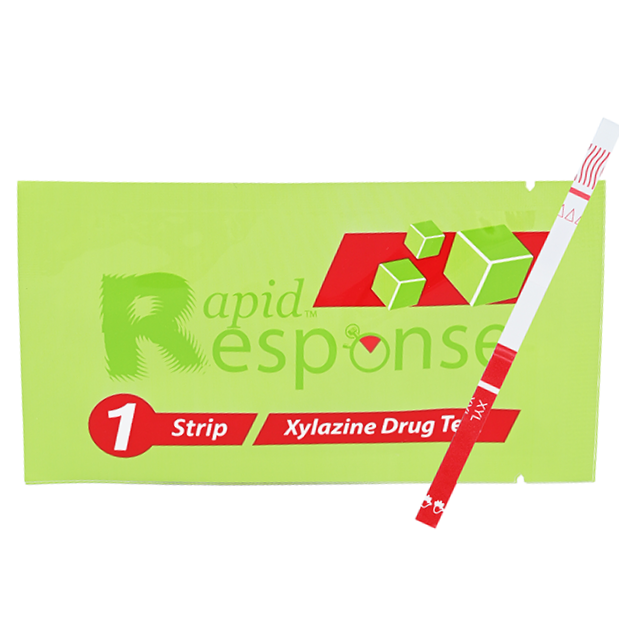
The quality of street drugs (their strength, purity, and potency) is always unpredictable and most are “cut” with other drugs like fentanyl, xylazine, acetaminophen or caffeine. Because you can’t determine drug purity by just looking at it, drug testing is always recommended. This includes testing street pills, since many fake pills are cut, re-pressed and sold as “prescription pills” to appear higher in quality. Sometimes fake pills are easy to spot, and other times nearly impossible.
Know your source
Tolerance is your body’s ability to process a certain amount of a drug. A low tolerance means it takes less of the drug to feel its effects, while a high tolerance means your body has adapted to larger amounts, so it takes more to achieve the same effects as before.
Tolerance develops over time but can decrease quickly when someone stops using a drug, such as during detox, substance use or mental health treatment, incarceration, or hospitalization. If you have recently taken a break from using drugs—especially opioids—start with a small amount and increase slowly. Even a few days of reduced use can lower your tolerance, making your previous “normal dose” potentially fatal.
Know your dose
Most fatal overdoses are the result of mixing drugs (using multiple different drugs at the same time, or within a short time frame). If you can, avoid mixing drugs with the same effects, such as depressants like opioids and alcohol, and drugs with opposite effects, such as heroin and cocaine (speedballing).
Mixing drugs (poly-drug use)
Signs of an overdose
Signs can look different depending on the substance, but some common signs include:
Opioids
Pinpoint pupils (center part of eye is very small)
Slow, irregular, or stopped breathing
Unresponsive to voice or touch
Slow heartbeat or low blood pressure
Stimulants
Passing out (but still breathing)
Irregular breathing
Racing heartbeat
Overheating
Unable to sit still
Erratic state (“tweaking”)
Intense panic
Extreme paranoia and agitation
Increased aggressiveness
Jerking movements
Intense teeth grinding
Key Terms
Overdose Prevention Strategies
Click on the icons below to learn more about each prevention strategy


Recognizing and Responding to Overdose
-
Recognizing and Responding to an Opioid Overdose
-
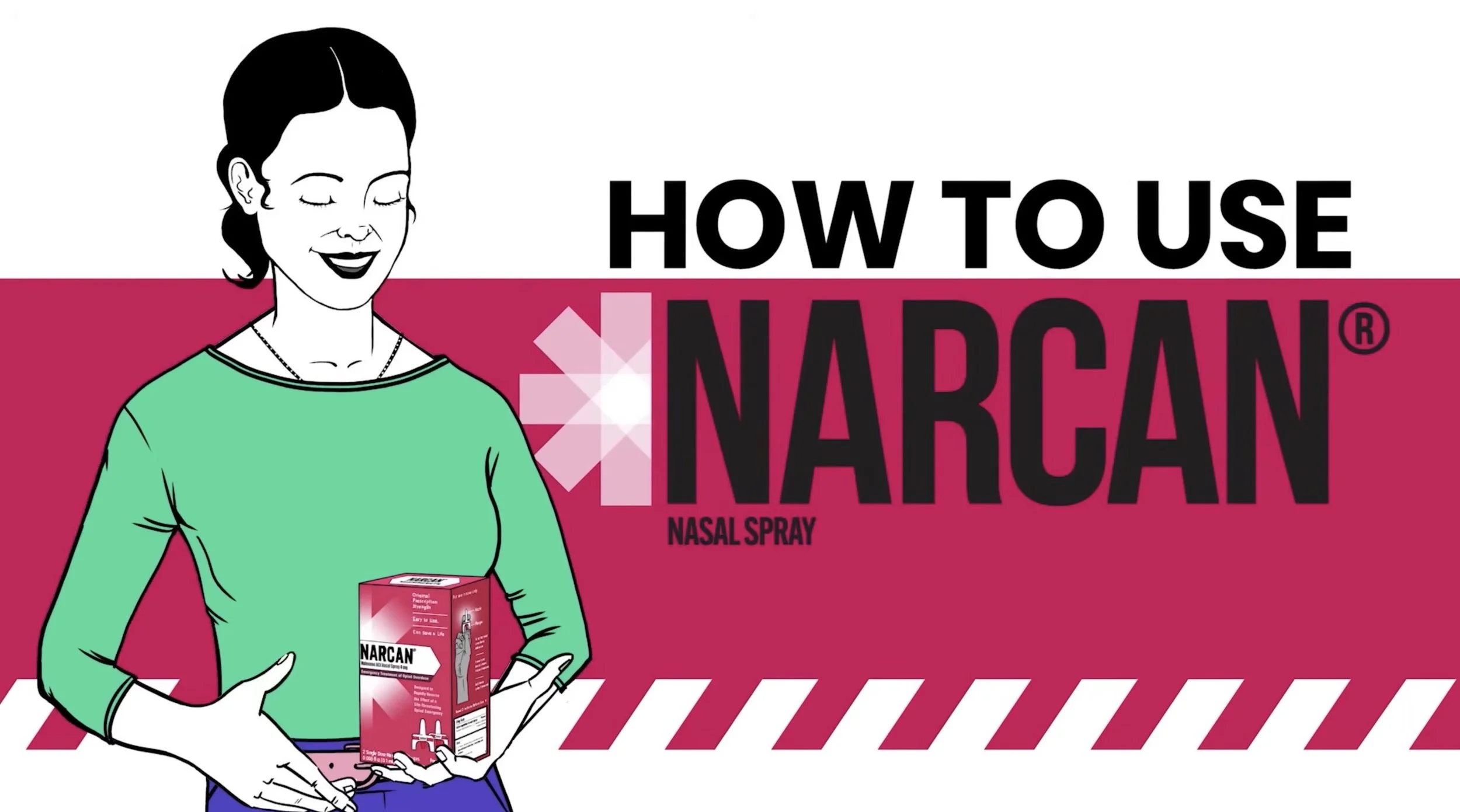
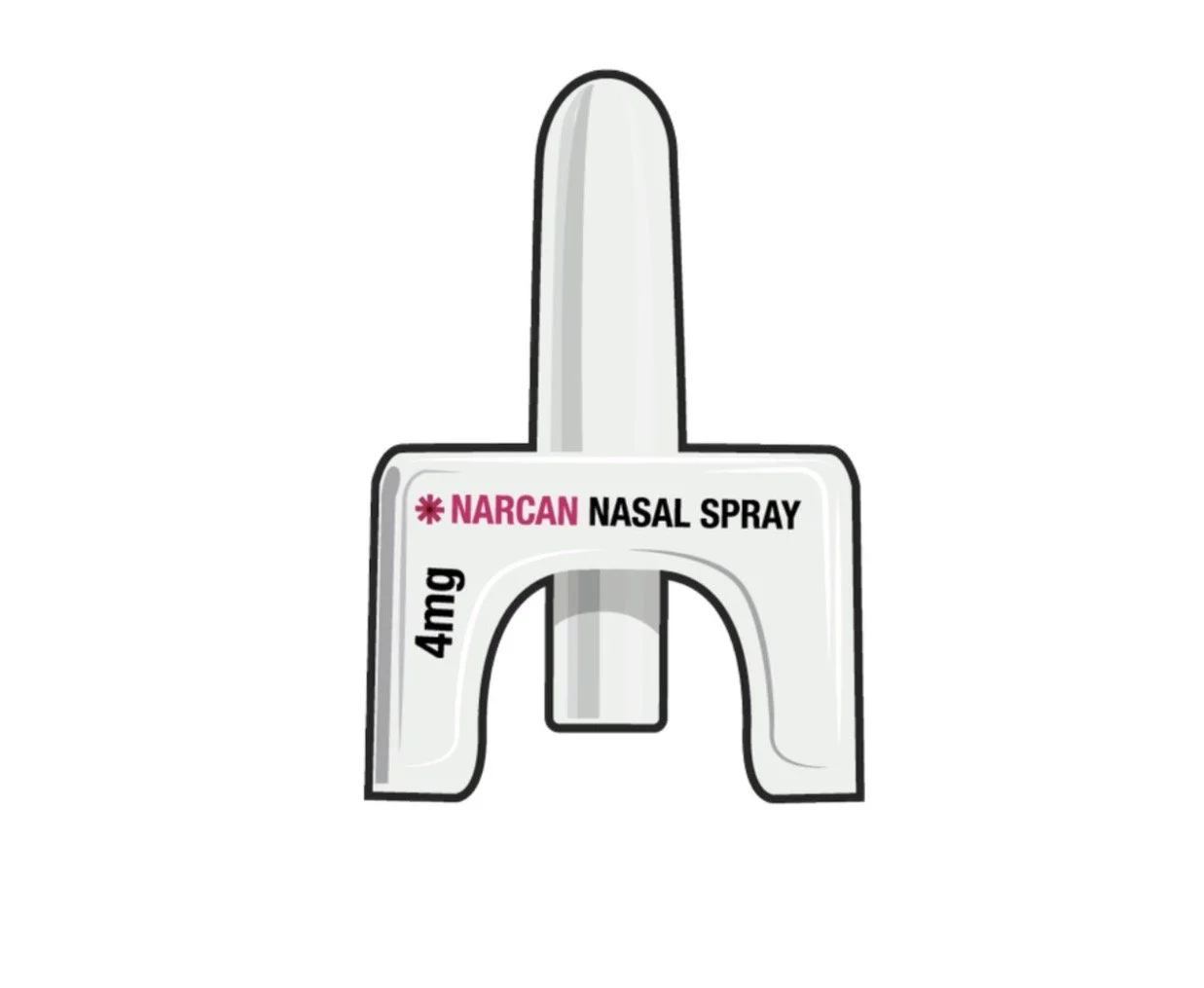
How to Use Narcan
-
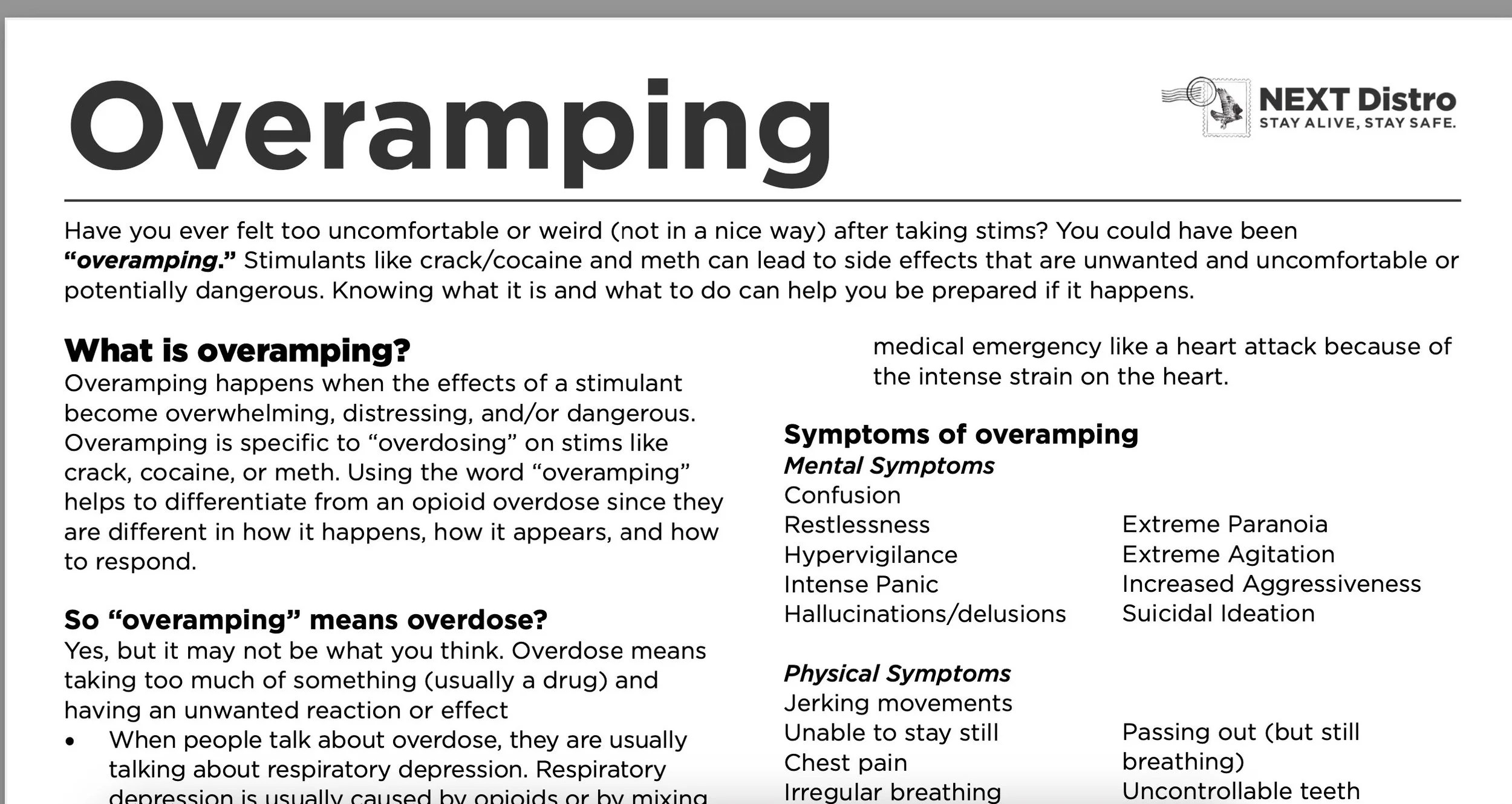
Overamping (Stimulant Overdose)
-
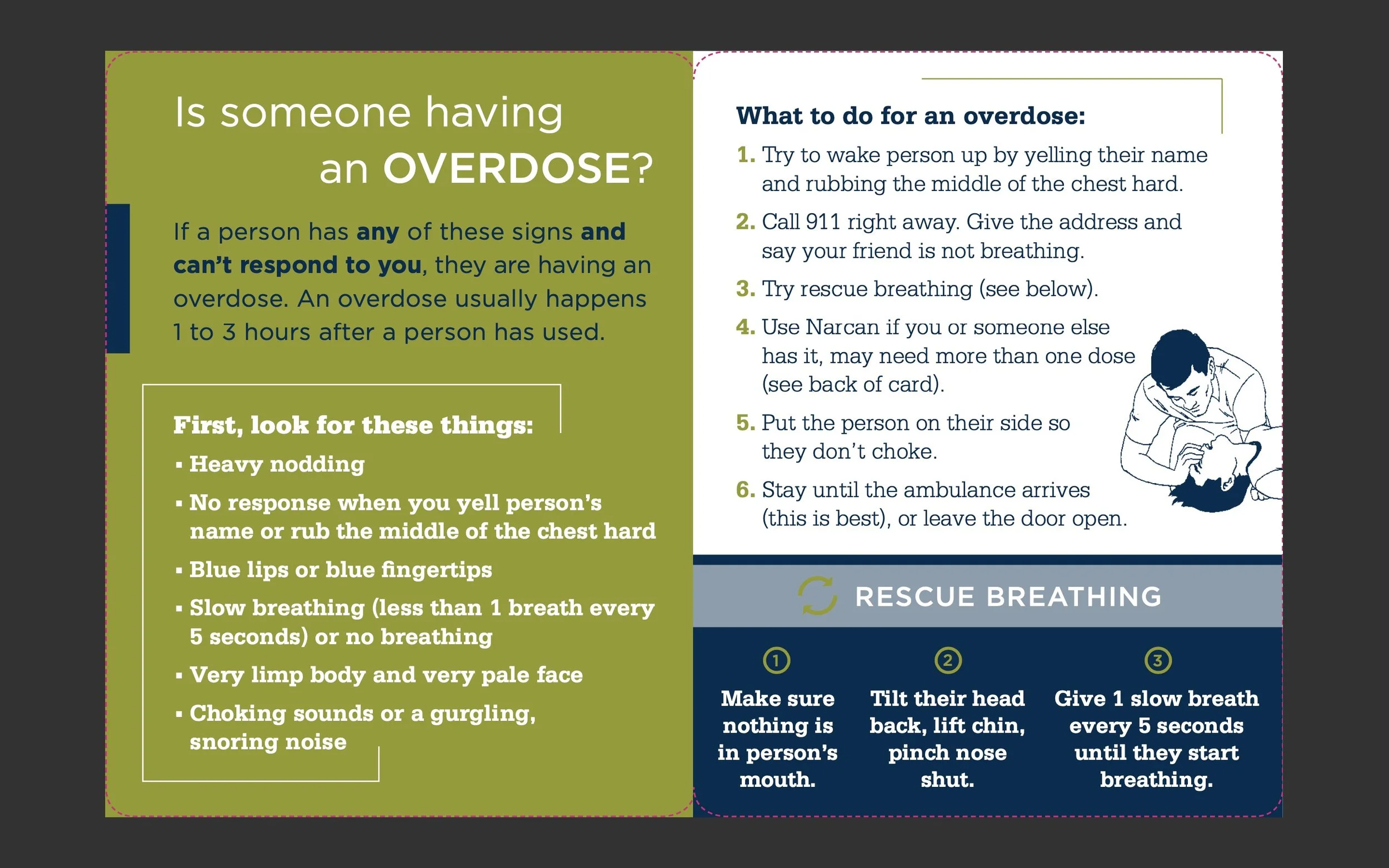
Overdose Prevention and Response Card
-
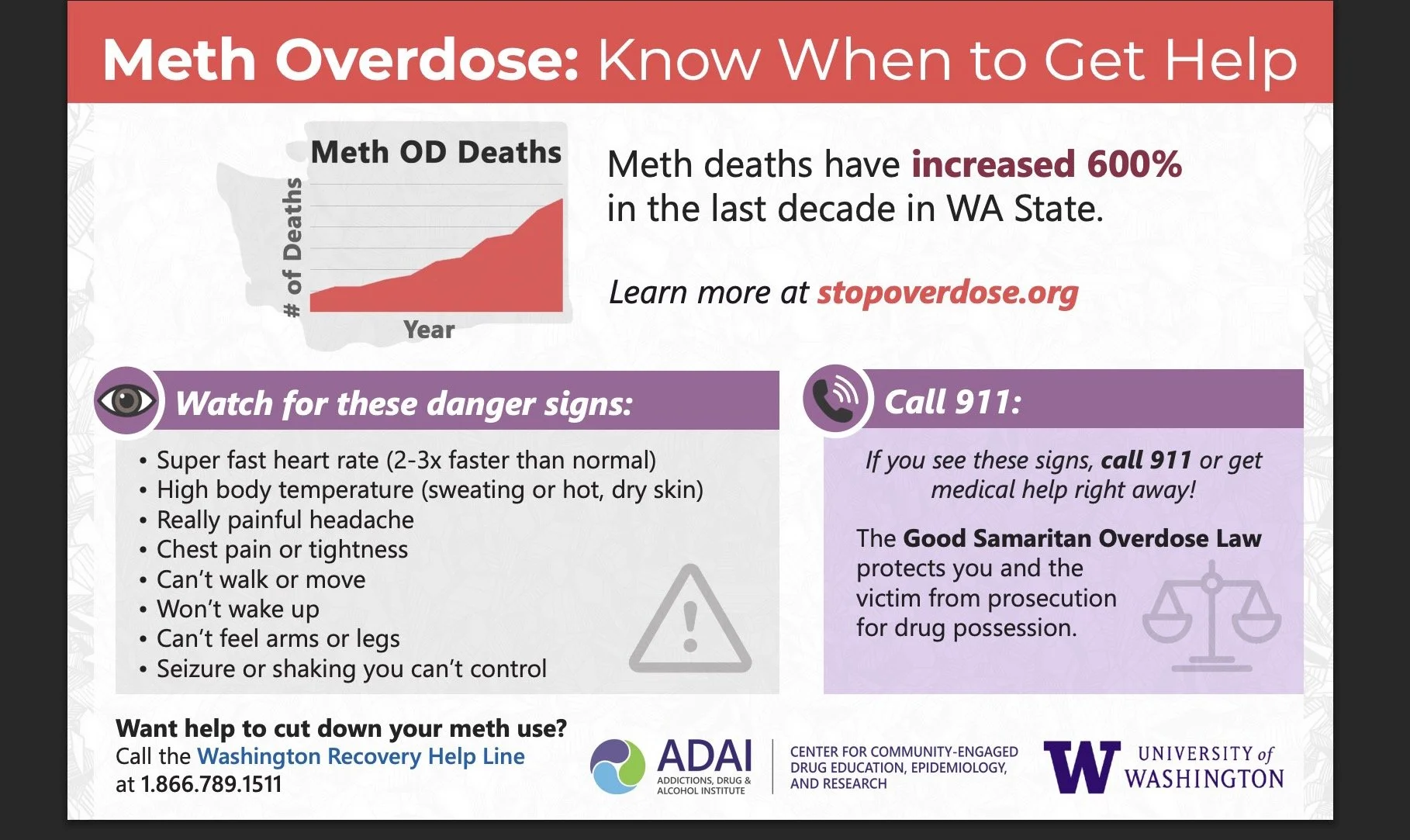
Meth Overdose